
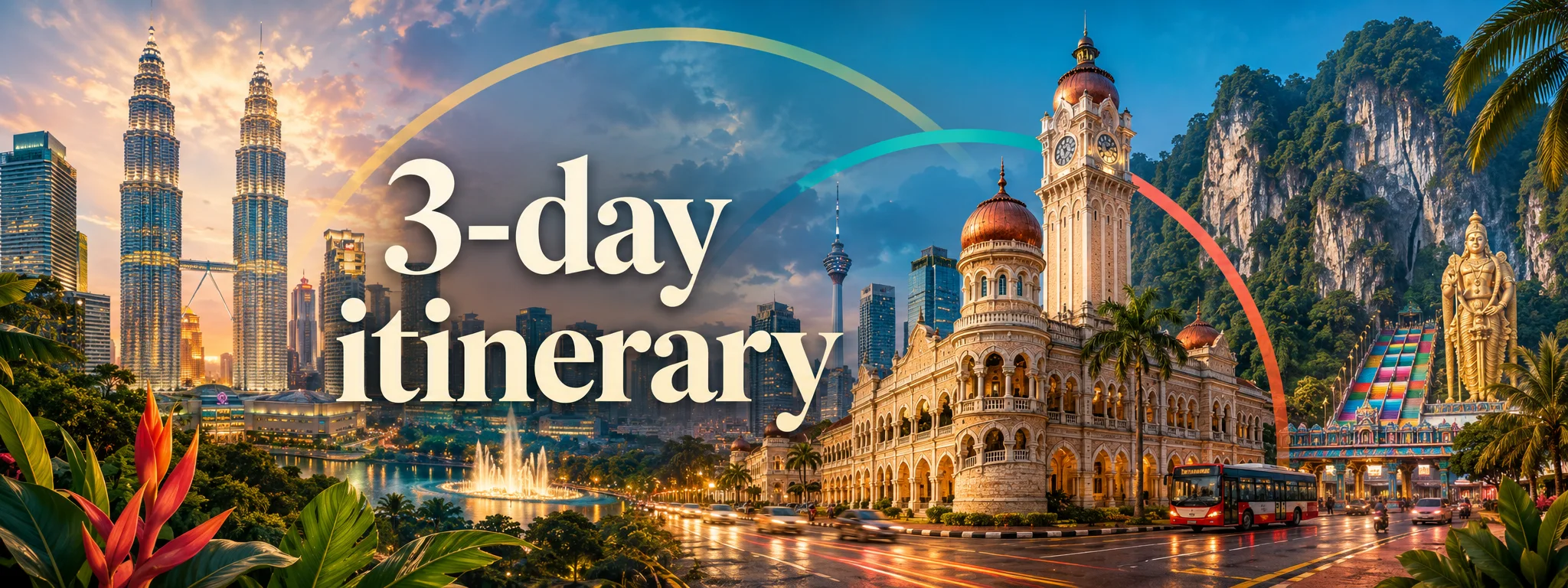
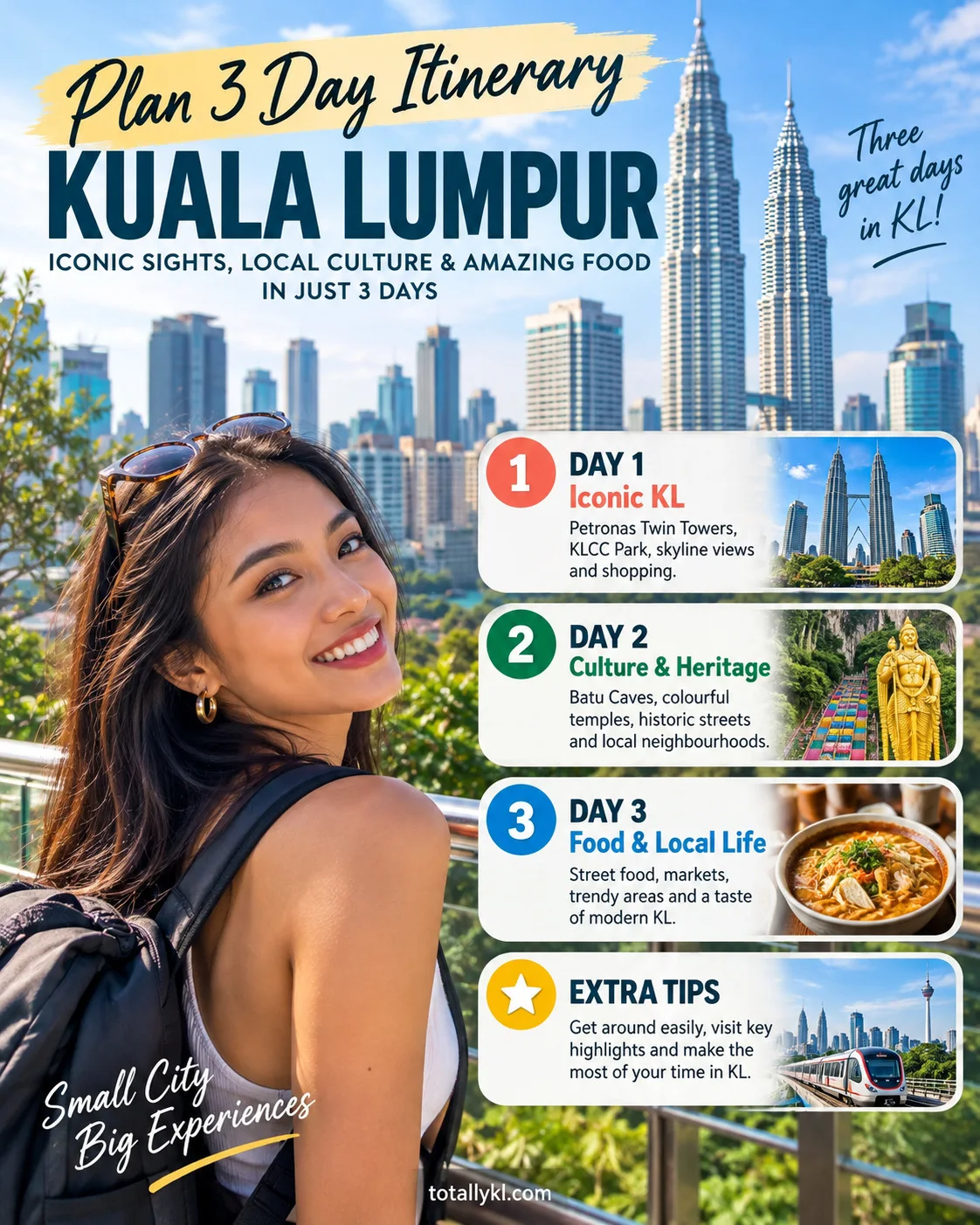
How to use this three-day plan
Kuala Lumpur rewards sensible clustering more than a heroic checklist. The city centre is compact on a map but hot pavements, road crossings, sudden showers and transfers between rail lines can turn a short distance into a slow hour. Treat the schedule below as a framework: keep the morning anchor, choose one or two secondary stops, then protect some unstructured time for food or a neighbourhood you unexpectedly like.
Where to stay for a short visit
For three nights, KLCC and Bukit Bintang are the easiest bases. KLCC gives you direct access to the towers, park and covered pedestrian links; Bukit Bintang puts food, shopping and nightlife on the doorstep. Chinatown can be excellent value, but first-time visitors who want late-evening convenience usually get more from the two central bases.
Day 1 morning — Petronas Towers and KLCC
Start with the Petronas Twin Towers if the observation experience matters to you. Use the official ticketing channel and reserve a timed slot rather than building the day around a speculative walk-up. Afterwards, slow the pace in KLCC Park, Suria KLCC and the covered link towards the convention-centre side of the district.
Day 1 afternoon — choose one indoor anchor
KL’s heat makes an indoor afternoon useful rather than lazy. Families can use Aquaria KLCC; science-minded visitors can check current sessions at Petrosains; shoppers can simply stay within Suria KLCC. Avoid stacking multiple ticketed attractions because queues and fixed entry times quickly remove the flexibility that makes a short city break enjoyable.
Day 1 evening — skyline and Jalan Alor
Return to the park around dusk if you want the classic tower lighting and fountain atmosphere, then move to Bukit Bintang for dinner. Jalan Alor is useful as an energetic first-night introduction, but it is not the only place to eat. If you prefer a calmer meal, use the surrounding streets or one of the city’s mall food halls and save your appetite for the heritage districts on Day 2.
Day 2 morning — Merdeka Square and the heritage core
Begin around Merdeka Square before the middle of the day. Walk the historic core at street level, using the river, old civic buildings and nearby mosques as orientation points rather than trying to enter every attraction. Dress respectfully if a religious visit is part of the plan and keep a light rain layer or umbrella in your day bag.
Day 2 lunch and afternoon — Chinatown
Continue towards Chinatown and Petaling Street for lunch, temples, shophouse streets and cafés. Central Market and the surrounding lanes make an easy weather fallback. This is also a good place to slow down: the value is in comparing food traditions and neighbourhood details, not racing from one photographed landmark to the next.
Day 2 late afternoon — Brickfields or a viewpoint
If you still have energy, take rail to Brickfields for temples and Indian-Malaysian food, or head directly to one of the options in our best viewpoints guide. KL Tower’s official site lists its Observation Deck and Sky Deck as its main skyline attractions; weather matters, so make the final choice only after seeing the day’s visibility.
Day 3 morning — Batu Caves
Use the morning for Batu Caves. Earlier is generally more comfortable for the staircase and gives you more recovery time if trains, road traffic or crowds are slower than expected. It is an active religious site, not just a photo stop, so respectful clothing and behaviour matter. Do not schedule it immediately before an airport transfer.
Day 3 afternoon — keep one flexible city block
Back in central KL, choose what your trip still lacks: shopping in Bukit Bintang, a relaxed museum, Thean Hou Temple, or simply a long lunch. Three-day itineraries often fail because every spare hour is pre-booked. A flexible final afternoon absorbs rain, delayed transport and the inevitable attraction you discover only after arriving.
Transport strategy
Use rail for the predictable backbone and Grab or taxis selectively for awkward last-mile links, especially when several people are travelling together. Keep routes grouped by district and resist crossing the centre repeatedly. Our getting-around guide covers the current network and payment choices in more detail.
What to book and what to leave open
Book only the experiences where timed capacity genuinely matters, such as a tower observation slot. Meals, neighbourhood walks and most park time are better left flexible. Festival dates and public holidays can materially change crowds and opening patterns, so check the current government calendar and attraction websites close to travel.
If a plan requires you to cross Kuala Lumpur more than twice in one day, reorganise it. Geography, shade and realistic transfer time matter more than squeezing in one extra attraction.