
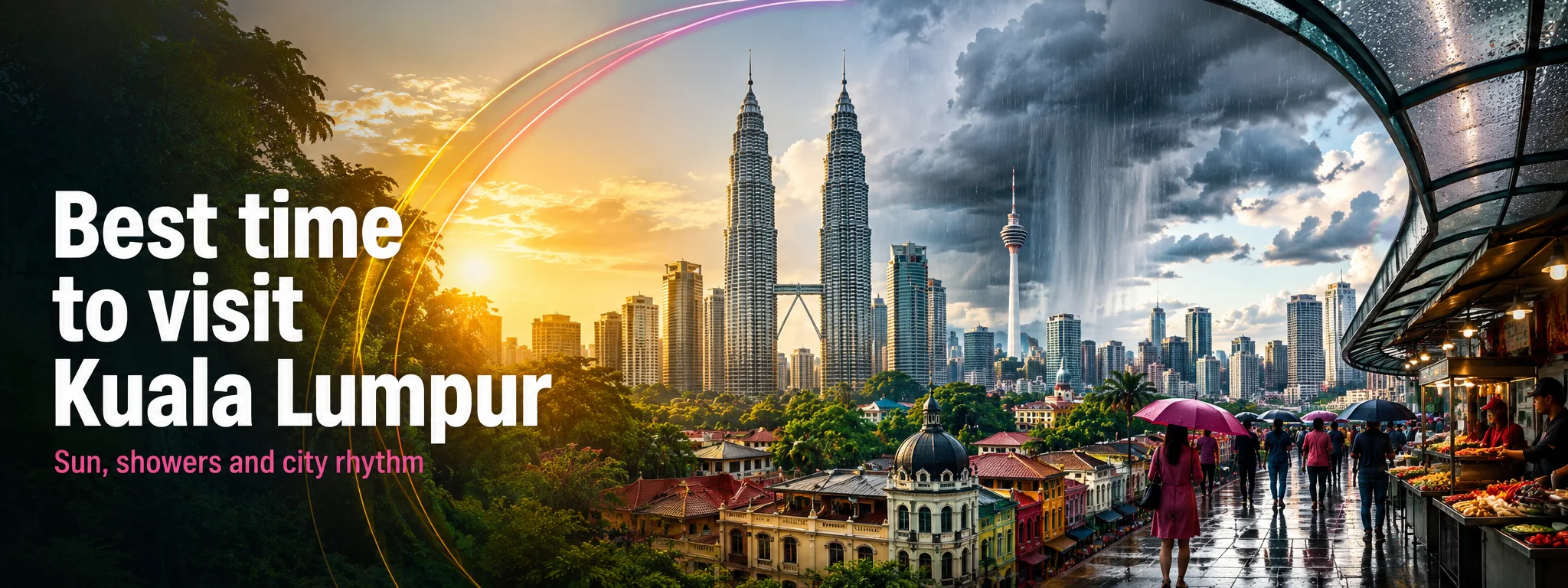
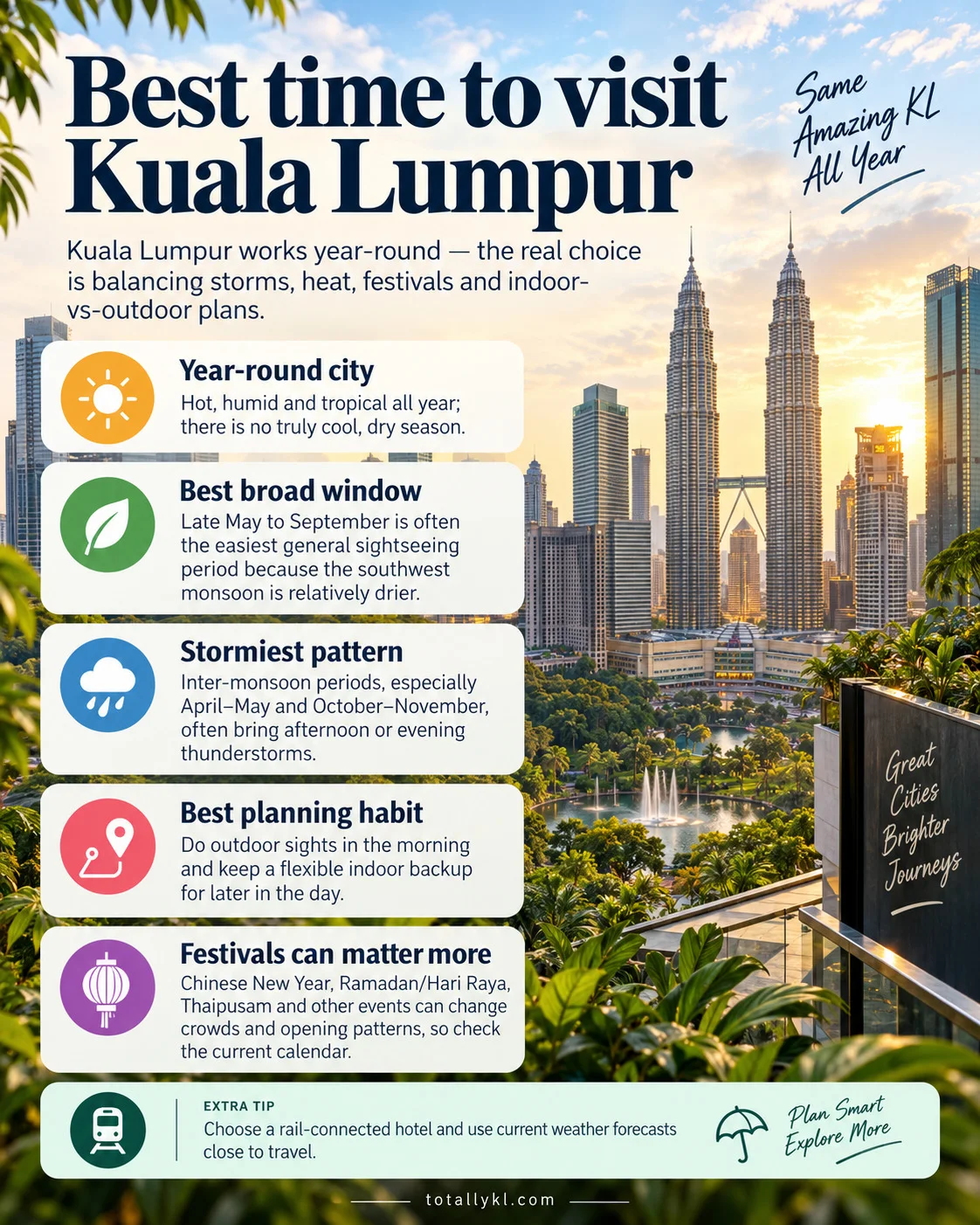
The short answer: Kuala Lumpur is a year-round city
There is no single month when Kuala Lumpur suddenly becomes cool and dry. The city sits in tropical Peninsular Malaysia, so heat, humidity and the possibility of rain are part of the trip in every season. That sounds less convenient than it really is. KL is unusually easy to adapt to weather because many of its strongest sights, food stops, malls, museums and transit links are indoors or covered.
For most travellers, the best time to visit is therefore the period that best fits their priorities. If you want the lowest chance of repeated afternoon storms, the southwest-monsoon part of the year is often easier to work with. If you want a major cultural festival, accept busier streets and shifting opening patterns. If you are travelling for food, shopping or a short stopover, almost any month can work with a sensible daily rhythm.
Understand KL's four-part weather pattern
METMalaysia describes Malaysia as having two main monsoon regimes plus two inter-monsoon periods. The southwest monsoon generally runs from late May to September and is relatively drier over much of the country. The northeast monsoon runs from November to March; its heaviest persistent rain is especially associated with the east coast of Peninsular Malaysia rather than Kuala Lumpur on the western side.
The transition periods matter more to a KL visitor than simple “wet” and “dry” labels. During inter-monsoon conditions, winds are lighter and variable, mornings can begin relatively clear, and heat-driven thunderstorms commonly build later in the day. METMalaysia says thunderstorms are especially frequent in April–May and October–November and usually occur in the evening or early evening over land.
| Period | Useful KL planning interpretation |
|---|---|
| Jan–Mar | Warm and humid; northeast-monsoon influence continues, but KL is not the east-coast monsoon maximum. Build rain flexibility into outdoor days. |
| Apr–May | Inter-monsoon period. Afternoon/evening thunderstorms can be frequent; schedule exposed outdoor sights earlier. |
| Late May–Sep | Southwest monsoon. Often relatively drier overall, though thunderstorms and occasional squall-line weather still occur. |
| Oct–Nov | Second inter-monsoon period, again favourable for afternoon thunderstorm development. |
| Nov–Dec | Northeast monsoon begins. KL remains visitable, but keep weather buffers and check current warnings rather than assuming a guaranteed dry spell. |
Do not plan around monthly averages alone
A monthly rainfall chart can make one month look clearly better than another, but tropical rainfall is often concentrated into short, intense events. A day can include bright sun, a heavy thunderstorm and a dry evening. Conversely, a “drier” period can still deliver disruptive storms. That is why a good KL itinerary should be built around flexibility rather than a promise of perfect weather.
Use the Malaysian Meteorological Department's current Kuala Lumpur forecast close to travel, and check warnings again each morning. If an outdoor viewpoint, park or walking route matters to you, put it early in the day and keep a museum, mall, market or long lunch as the swap-in option.
Best time for first-time sightseeing
For a first visit built around KLCC, Batu Caves, Merdeka Square, Chinatown and neighbourhood walking, late May through September can be a convenient broad window because the southwest monsoon is generally the relatively drier regime. That is not a guarantee of blue skies. Thunderstorms occur throughout the year, and METMalaysia notes that west-coast areas can still experience severe thunderstorms and squall-line weather.
The bigger advantage is itinerary resilience: use mornings for Batu Caves, outdoor heritage streets and parks; put air-conditioned attractions or shopping in the hotter middle of the day; and leave evenings flexible if a storm develops.
Best time if you dislike heat
There is no genuinely cool tourist season in central Kuala Lumpur. Recent METMalaysia district forecasts commonly place daily minimums in the mid-20s Celsius and maximums in the low-to-mid 30s, which is a better reminder of the city's year-round heat than chasing tiny seasonal differences.
If heat affects you, choose your hotel and daily structure more carefully rather than obsessing over the month. Stay near rail, avoid long unshaded walks at midday, carry water, use breathable clothing and schedule outdoor sights soon after opening. A cloudy or rainy afternoon can actually feel more manageable than a bright, still one.
Best time for outdoor attractions and viewpoints
Batu Caves, KLCC Park, Perdana Botanical Gardens, FRIM and city viewpoints are easiest when you can move exposed time into the morning. Inter-monsoon afternoons are the least forgiving time to build an inflexible outdoor-only schedule because thunderstorm development is common.
For skyline views, weather matters more than season. Haze, cloud and rain can reduce visibility even when it is not actively storming. If a tower ticket is timed and expensive, check the forecast before locking in a sunset slot and understand the operator's change or cancellation rules.
Rain does not need to ruin a KL day
Heavy rain often changes the order of a day rather than cancelling it. KLCC is particularly weather-resistant because the PETRONAS Twin Towers area, Suria KLCC, Petrosains and nearby attractions can be combined with relatively little exposed walking. Bukit Bintang also gives you malls, food and covered indoor time while you wait for a storm to pass.
Carry a compact umbrella, but treat lightning more seriously than ordinary rain. METMalaysia emphasises that every thunderstorm produces lightning and that strikes can occur outside the heaviest rain area. When thunder is close, move inside rather than sheltering under a tree or trying to finish an exposed park walk.
Festival timing can matter more than weather
Kuala Lumpur's multicultural calendar is one of the strongest reasons to choose a particular travel window. Chinese New Year, Ramadan and Hari Raya Aidilfitri, Deepavali, Thaipusam, Wesak Day, National Day and other celebrations can transform streets, temples, mosques, malls and dining patterns. Tourism Malaysia also runs year-specific cultural events, especially during Visit Malaysia 2026.
Several festival dates move each year because they follow lunar or religious calendars. Check the current official calendar before booking rather than relying on a date copied from an older travel article. Around major holidays, some independent businesses may close or reduce hours while malls and visitor precincts may become busier. The experience can be excellent if the festival is part of why you are travelling; it is less convenient if you expected an ordinary operating week.
Chinese New Year: lively, photogenic and busy
Chinese New Year brings strong visual energy to areas such as Chinatown, temples and major malls. Decorations, lion-dance programmes and family gatherings can make KL feel especially festive. At the same time, some Chinese-owned businesses may close for family celebrations, transport demand can rise and popular dining can require more planning.
If you want the atmosphere, arrive with a flexible food list rather than depending on one restaurant. If you mainly want routine sightseeing, check holiday dates first and book key transport or accommodation earlier than you otherwise would.
Ramadan and Hari Raya: plan with respect, not alarm
Kuala Lumpur remains very workable for non-Muslim visitors during Ramadan. Tourist attractions, public transport and many restaurants continue operating, although business patterns can shift and the city becomes busier around breaking-fast time. The evenings can be particularly interesting, with bazaars and family dining becoming part of the daily rhythm.
Hari Raya Aidilfitri is a major travel and family period. Intercity transport and roads can be busier as residents travel to their hometowns. If your KL stay overlaps the holiday, confirm individual attraction and restaurant hours and allow more transport buffer.
Thaipusam and Batu Caves
Thaipusam is one of the most distinctive times to see the Batu Caves area, but it is not a normal sightseeing day. Large numbers of devotees and visitors, processions, road changes and crowd management can fundamentally alter access. Go specifically for the religious and cultural experience, follow local instructions and dress respectfully. If you simply want an easy Batu Caves visit, choose another day.
School holidays, weekends and event crowds
KL is both a major domestic destination and a working capital, so crowd patterns are not driven only by foreign tourism seasons. Malaysian school holidays, long weekends, concerts, conventions and shopping events can make certain districts noticeably busier. KLCC and Bukit Bintang are especially sensitive to event traffic.
If your dates are fixed, this is usually manageable. Book a well-located hotel, use rail for city-centre movement, and reserve only the attractions that genuinely require it. Do not overbook every hour just because the city is busy.
A practical month-by-month decision framework
January to March: good for travellers whose dates align with northern-hemisphere winter, but do not assume “winter” means cool. Watch the Chinese New Year calendar and retain rain flexibility.
April to May: excellent if you are comfortable working around afternoon storms. Start outdoor days early and avoid making every afternoon weather-dependent.
Late May to September: often the simplest broad recommendation for general sightseeing because the southwest monsoon is relatively drier. Expect heat and still keep storm backups.
October to November: a workable value-and-city-break period if you accept a higher chance of inter-monsoon thunderstorms. Indoor/outdoor pairing becomes particularly useful.
December: festive city atmosphere and year-end travel demand. Rain remains possible and accommodation can be busier around holidays, so location and cancellation flexibility matter.
How many weather buffers should you build in?
For a three-day trip, avoid putting all outdoor priorities on one afternoon. Split them across mornings and place flexible indoor attractions after lunch. For a five-day trip, keep at least one half-day that can absorb a weather swap. This matters more than finding a supposedly perfect month.
KL's rail network also makes weather swaps easier. A hotel near an LRT or MRT station lets you change districts without waiting for road traffic in heavy rain, and large indoor complexes around KLCC and Bukit Bintang give you useful alternatives without wasting the day.
What to pack in every season
Bring light, breathable clothing, a compact umbrella, sun protection and footwear that can handle wet pavements. A very light layer can help in aggressively air-conditioned malls and transport. If your plans include mosques or temples, carry clothing that makes respectful coverage easy rather than relying on venue loan garments.
Do not build the packing list around a single forecast viewed a week out. Tropical convective weather can be local and change quickly. Recheck close to the day and adjust the order of your itinerary instead.
The best time depends on your travel style
First-time visitor: favour late May–September if your dates are flexible, but prioritise a central rail-connected hotel over chasing a “perfect” month.
Festival traveller: choose the celebration first, then accept the operational changes and crowds that come with it.
Outdoor-focused traveller: avoid building the trip around inter-monsoon afternoons; use morning starts and weather buffers.
Food and shopping trip: almost any month works because much of the experience is weather-resistant.
Short stopover: do not move the trip by months for climate alone. Check the 3–7 day forecast, choose two priority sights and keep one indoor fallback.
Use current sources before you travel
For weather, use METMalaysia's Kuala Lumpur district forecast and its monsoon and thunderstorm guidance. For year-specific events, check Tourism Malaysia's current events calendar. These are more useful close to departure than a travel article promising that one particular month will always be dry, cheap or quiet.
If you can choose freely, late May through September is a sensible broad window for a first sightseeing trip because it falls in Malaysia's relatively drier southwest-monsoon regime. But KL is genuinely year-round: a rail-connected hotel, early outdoor starts and an indoor backup plan matter more than finding a mythical rain-free month.