

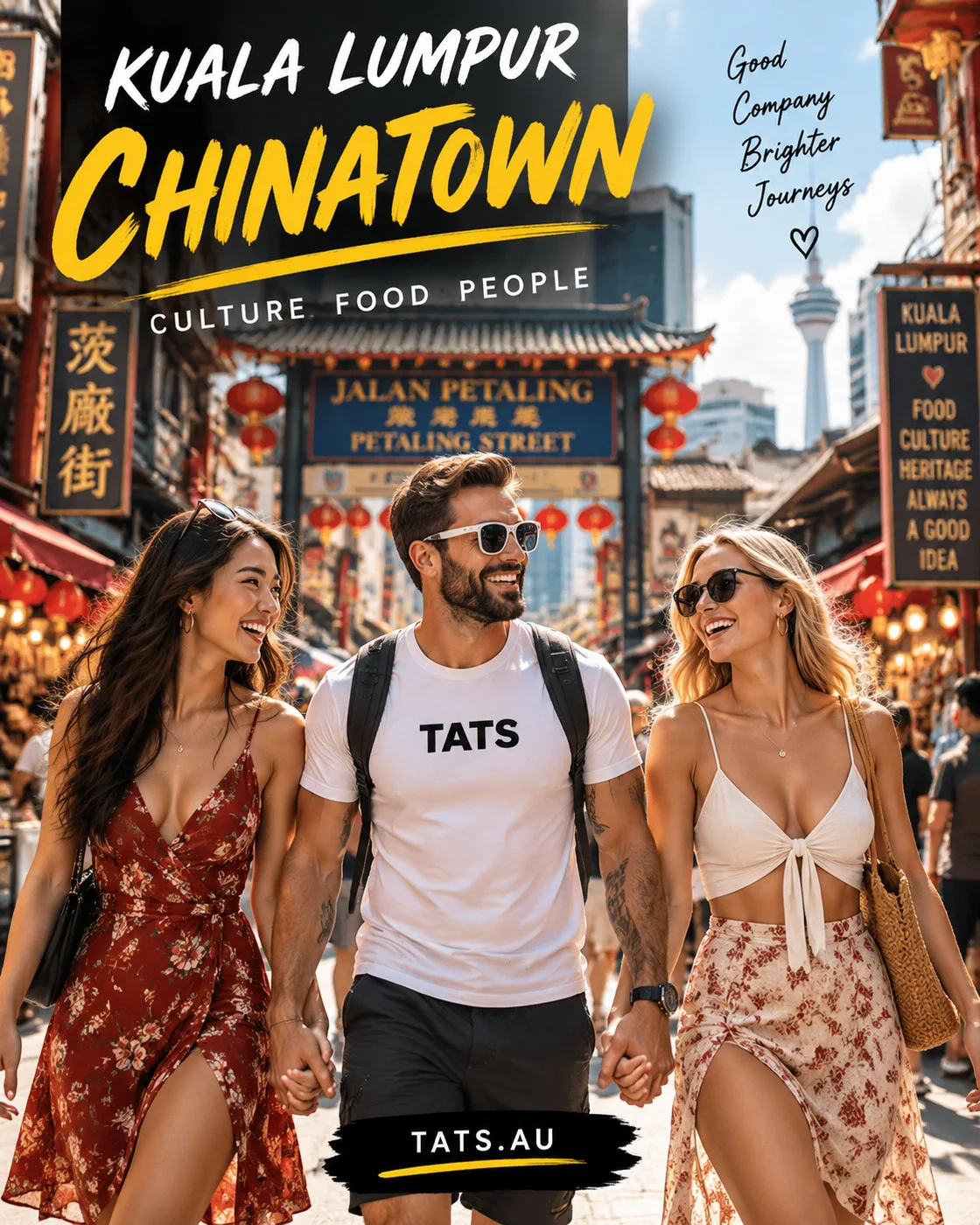
Chinatown is bigger than Petaling Street
Petaling Street is the part everybody photographs: a covered market street lined with stalls, food and crowds. Tourism Malaysia describes the wider Chinatown area as a lively mix of shops, restaurants and hawker stalls, surrounded by heritage buildings, clan houses and temples. That wider neighbourhood is what makes the visit worthwhile.
If you only walk straight through the main market and leave, you will see the most commercial part and miss much of the character. Give yourself permission to wander the side streets, stop for food and include at least one temple or heritage stop.
What Petaling Street is actually like
The main market is busy, visitor-oriented and unapologetically commercial. Expect clothing, accessories, souvenirs, snacks and novelty goods rather than a museum-like heritage experience. Tourism Malaysia's current visitor information lists the area as a free-entry attraction and a major outdoor shopping stop.
The atmosphere changes through the day. Earlier hours make it easier to look at the surrounding architecture and move around; later periods generally feel busier and more market-focused. Exact stall hours vary, so treat any single published time as a guide rather than a promise that every vendor will be trading.
Do not come here just to buy things
The neighbourhood is valuable even if you buy nothing. Old shophouse streets, temples, food businesses and newer creative venues sit within a compact walking area. The contrast between traditional commercial buildings and adaptive-reuse projects is one of the clearest ways to see how central KL has evolved without completely erasing its older layers.
Use the market as the spine of the walk, not the sole purpose of it.
Sri Maha Mariamman Temple
Sri Maha Mariamman Temple is one of the area's most important landmarks and remains an active Hindu place of worship. Tourism Malaysia dates it to the 1870s and highlights its richly decorated gateway tower. Visitors are welcome when access is permitted, but this is not merely an attraction.
Dress modestly, remove footwear where instructed and avoid blocking worshippers for photographs. Festival periods can be especially meaningful but also much busier than an ordinary sightseeing visit.
Chinese temples and clan heritage
Chinatown's Chinese religious and community buildings are part of the area's identity, not decorative props. Guan Di and smaller temples around the district add a very different atmosphere from the market lane. Pause long enough to understand what you are entering, observe posted rules and keep voices low.
Our multicultural heritage guide gives broader context for why Hindu, Chinese and Muslim sites sit so close together in the old city.
Central Market belongs in the same walk
Central Market is only a short walk away and makes an excellent indoor counterpoint to Petaling Street. Browse Malaysian crafts, batik and art, cool down in the air-conditioning, then return to the street grid.
Doing the two together also avoids wasting time on separate transport legs. Central Market is an especially useful rain or midday-heat break.
Kwai Chai Hong and newer creative Chinatown
Modern Chinatown is not frozen in the early 20th century. Restored lanes, murals, cafes, bars and adaptive-reuse venues have added a newer layer around the older shophouses. Tourism Malaysia specifically points visitors toward Kwai Chai Hong and REXKL as examples of this changing neighbourhood.
That evolution is part of the appeal, but do not mistake every photogenic restoration for untouched heritage. Enjoy the mix for what it is: old commercial KL being reused rather than a perfectly preserved historic quarter.
Food is a reason to stay longer
Chinatown rewards grazing. Noodles, kopitiam breakfasts, snacks, bakeries, desserts and newer cafes can all fit into the same walk. Instead of planning one giant meal, leave room to try something small in more than one place.
If you are chasing a specific famous stall, verify its current trading day and hours independently. Long-running food businesses can still close, relocate or sell out, and an old blog post is not a reservation.
Shopping and bargaining
Tourism Malaysia presents Petaling Street as a place where bargaining can be part of the shopping experience. Keep it friendly. Compare prices first, decide what the item is worth to you, and walk away if the gap is too large.
Do not treat aggressive haggling as mandatory. Fixed-price shops and food businesses are different from open-market souvenir stalls, and not every transaction is a negotiation.
Counterfeit goods: know what you are buying
Petaling Street has long been associated with imitation-branded merchandise. Do not assume a logo means an item is genuine, and do not pay “authentic” prices for something you have not verified. Travellers should also remember that importing counterfeit goods can create legal or customs problems in some countries.
If authenticity matters, buy from an authorised retailer elsewhere. Chinatown is more rewarding when the market itself is treated as atmosphere rather than a source of supposed luxury bargains.
Getting there
Pasar Seni is the most useful public-transport gateway, with both LRT and MRT access serving the wider Chinatown/Central Market area. Merdeka MRT can also make sense depending on the direction of your walk.
Rail is usually easier than driving into the old-city grid just to visit the market. See our getting around Kuala Lumpur guide for network details.
A practical half-day route
Start at Pasar Seni, browse Central Market, then walk into Chinatown for Sri Maha Mariamman Temple and the Petaling Street area. Continue through side streets toward Kwai Chai Hong or REXKL, stop for food, and finish toward Merdeka if the weather and your energy cooperate.
The exact order matters less than clustering the district. You should rarely need a car between these stops.
Pair Chinatown with Merdeka
Merdeka Square and the colonial core are close enough to form a broader old-KL day. The transition from Chinese commercial streets to civic-era architecture is more interesting on foot than as two isolated taxi stops.
In hot or wet weather, shorten the outdoor segments and use Central Market or a cafe as a reset point.
Best time to visit
Choose timing based on what you want. Morning and earlier daytime suit architecture, temples and calmer walking. Late afternoon into evening brings more market atmosphere, food and nightlife energy. Weekends and holiday periods can be significantly busier.
For photography, the softer light around late afternoon can work well, but do not build a rigid plan around it if tropical rain is forecast.
Heat, rain and walking reality
Distances look short on a map, but KL heat and humidity can make a compact heritage walk surprisingly tiring. Carry water, use shade where possible and take breaks before everybody becomes miserable.
A sudden downpour can also turn pavements and crossings into a slower experience. Shoes with decent grip and a small umbrella are more useful here than an over-ambitious checklist.
Families and children
Children can enjoy the colour and snack-heavy nature of Chinatown, but the market gets crowded and visually intense. Keep younger children close around traffic and dense stall areas, and avoid turning the walk into hours of adult shopping.
Central Market, a snack stop and one visually interesting temple can make a better family route than trying to inspect every side street.
Accessibility and mobility
The district is central and well served by rail, but the heritage street environment is not uniformly smooth or step-free. Kerbs, crowded pavements, shop thresholds, temporary stalls and uneven surfaces can make some routes harder for wheelchair users or travellers with limited mobility.
Plan a shorter loop, use the more spacious indoor Central Market as an anchor, and check specific venue access when it matters rather than assuming the whole neighbourhood has one accessibility standard.
Personal-safety basics
Use normal big-city market awareness. Keep phones and wallets controlled in crowds, do not leave bags hanging open behind you, and pause somewhere out of the pedestrian flow if you need to study a map. Crowded tourist zones are exactly where distraction makes small theft easier.
That does not mean treating Chinatown as dangerous. It means using sensible habits so the market remains enjoyable.
Who should stay in Chinatown?
The area suits travellers who value heritage, public transport, budget accommodation, food and a walkable central base more than polished malls or resort-style hotels. It can be particularly convenient for shorter stays where old-city sights are a priority.
Light sleepers and travellers wanting a very quiet, immaculate streetscape may prefer another district. Compare it with our best areas to stay in KL before booking.
Common Chinatown mistakes
- Walking only the Petaling Street market and assuming you have seen the neighbourhood.
- Scheduling Chinatown and Central Market on different days.
- Treating active temples as photo sets instead of places of worship.
- Assuming every branded market item is genuine.
- Spending so long bargaining over souvenirs that you miss the food and heritage around them.
- Underestimating heat, rain and crowded pavements because the map distances look tiny.
Think of Chinatown as a neighbourhood walk with a market in the middle, not a market with nothing around it. Central Market, temples, food, side streets and the newer creative spaces are what turn a quick shopping stop into one of KL's best old-city experiences.