

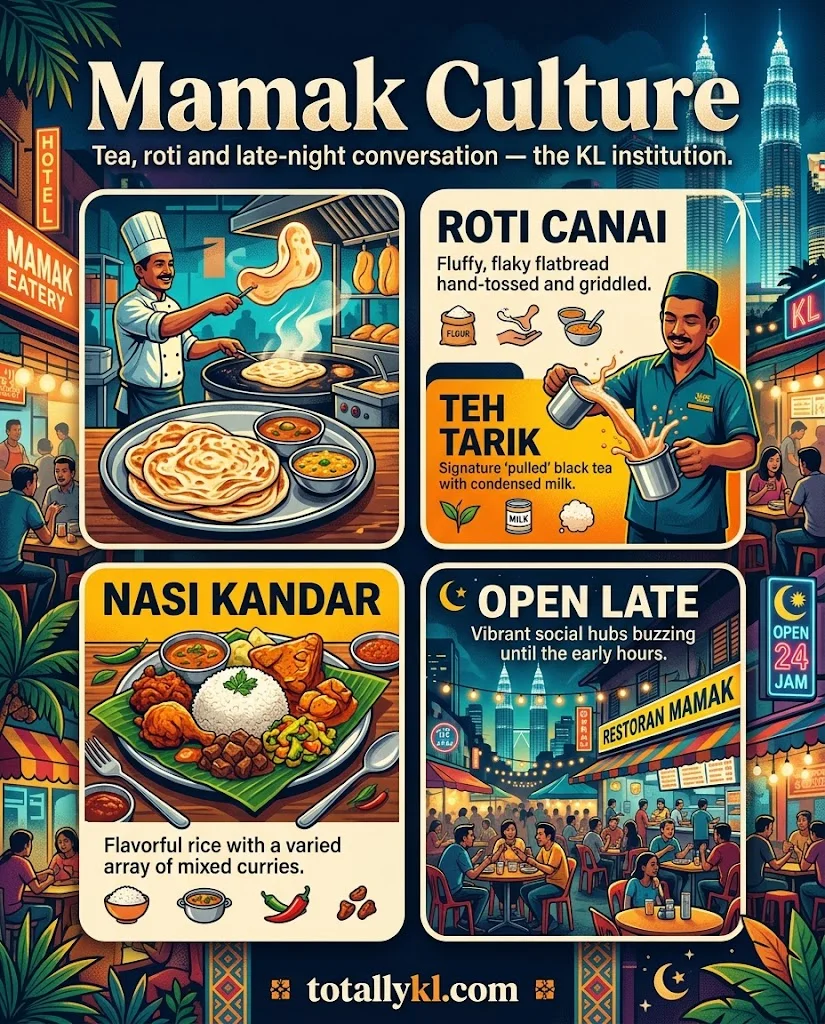
What a mamak actually is
Mamak restaurants trace back to Malaysia's Indian-Muslim community, and they've become one of the most distinctly KL institutions — casual, halal, usually open very late or around the clock, and genuinely mixed in clientele: office workers, students, families and night-shift crowds all overlapping at the same plastic tables. The menu blends Indian-influenced dishes (roti canai, teh tarik) with broader Malaysian staples like fried rice and noodles.
What to order
- Roti canai — flaky flatbread, the quintessential mamak order, served with dhal or curry for dipping
- Teh tarik — "pulled" milk tea, poured between vessels to create a frothy top; a mamak signature
- Maggi goreng — fried instant noodles, a genuinely beloved late-night order
- Nasi kandar — rice served with a choice of curries and side dishes, common at larger mamak restaurants
How it works
Seating is almost always casual and shared — expect plastic chairs, ceiling fans or open-air seating, and a general lack of ceremony. Ordering is usually done at the table with a server who'll remember complex multi-item orders without writing anything down, a small feat mamak staff are locally famous for.
Mamak restaurants are a genuine late-night social institution — don't be surprised to find them busiest well after midnight, especially near universities and residential areas.