
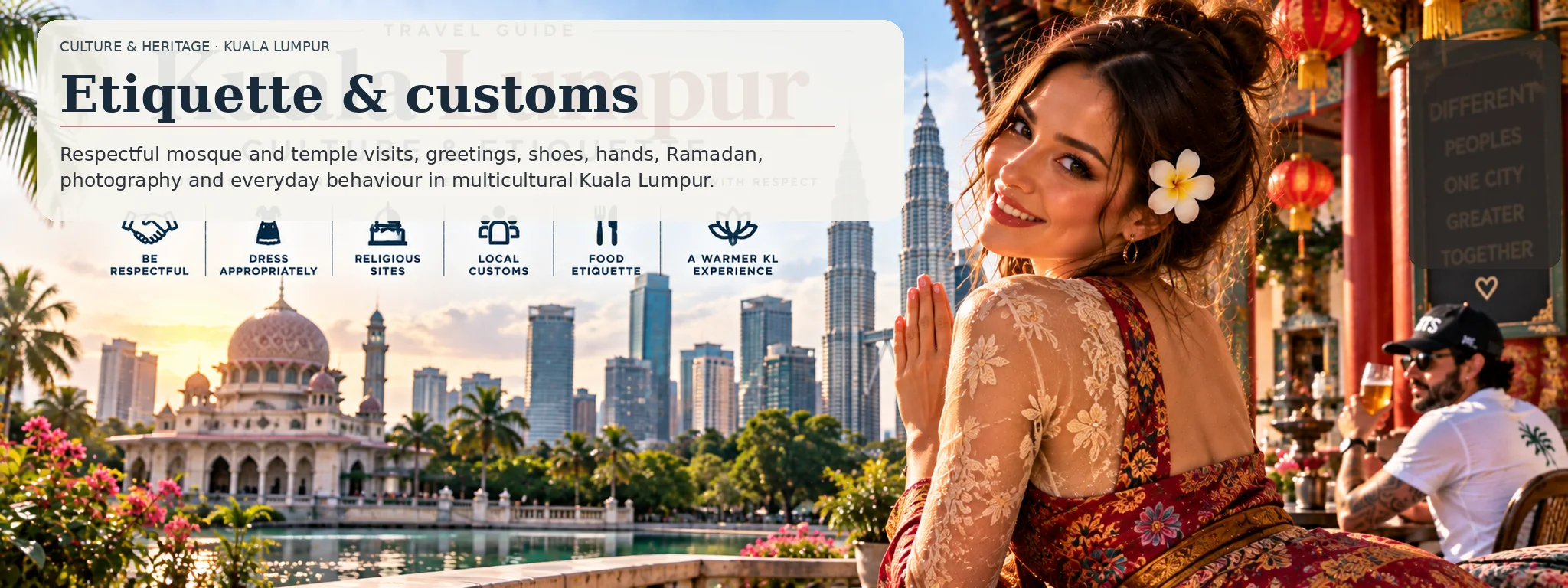
Follow the place in front of you
Kuala Lumpur contains Muslim, Buddhist, Hindu, Christian and other communities side by side. There is no single ritual rule for every site. Signs, staff and worshippers at the specific place should override generic travel advice.
Mosque visits
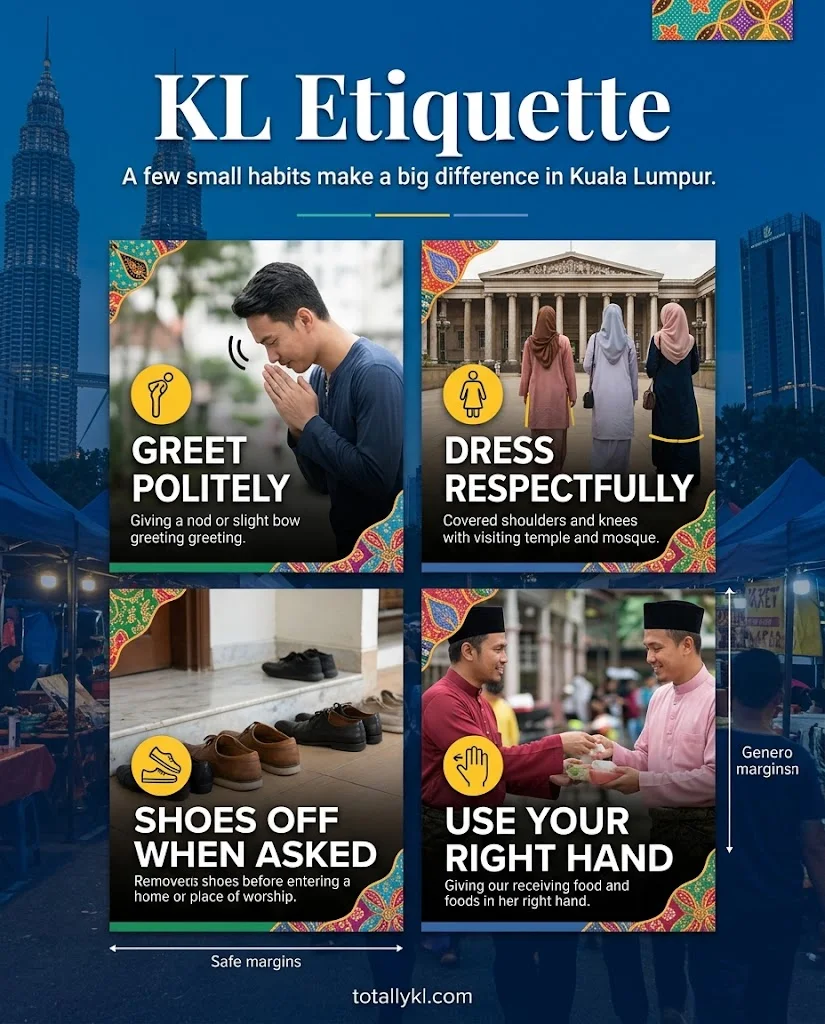
Dress modestly, remove shoes where directed and use visitor robes or head coverings when provided. Some prayer areas may close to tourists during worship. Speak quietly and avoid stepping in front of someone who is praying. If unsure, ask the attendant rather than copying another tourist.
Hindu and Chinese temples
Remove shoes where required, keep clothing respectful and do not interrupt active worship for a photograph. At Batu Caves, remember that the site remains a working Hindu religious complex even when the staircase is crowded with tourists.
Greetings and personal contact
Handshakes are common, but some Muslims avoid physical contact with the opposite sex. Let the other person initiate. A smile, nod or hand over the heart is an easy respectful alternative when you are uncertain.
Using hands and feet
Using the right hand—or both hands—for giving food, money or gifts is a considerate habit. Avoid pointing the soles of your feet at people or sacred objects when seated in religious spaces.
Homes and shoes
Removing shoes before entering a Malaysian home is normal. If you see shoes lined up at a doorway, treat that as a strong cue. The same principle applies at many religious spaces and some traditional businesses.
Ramadan
Many restaurants remain open for non-Muslims, especially in a diverse city like KL. You do not need to fast, but avoid making a spectacle of eating or drinking beside people who are fasting and expect popular places to become busy around sunset.
Photography
Ask before photographing individuals closely, especially worshippers, children or ceremonies. A building being open to tourists does not mean every ritual or person inside is automatically a photo subject.
Public affection, dress and alcohol
KL is cosmopolitan, but modest public behaviour travels well. Dress standards vary sharply between malls, nightlife venues and religious sites. Alcohol is available in many licensed places, but not every restaurant serves it and public drunkenness is poor form.
When you make a mistake
A brief apology and willingness to follow local guidance is usually enough. Malaysians are accustomed to international visitors; respectful curiosity matters more than performing every custom perfectly.
Observe first, ask when unsure and treat working religious sites as places of worship rather than sets for content creation.